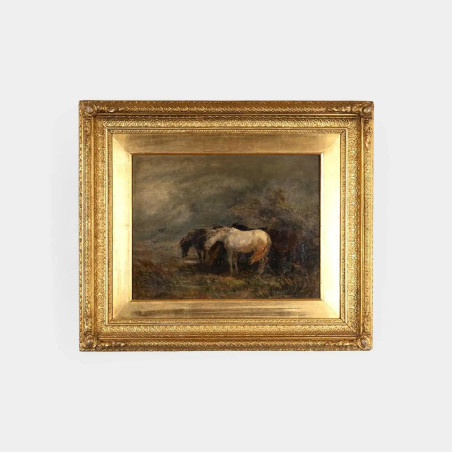
John Charlton R.B.A., R.I., R.O.I. (1849–1917): "Wee Busbie" Oil on canvas 1907
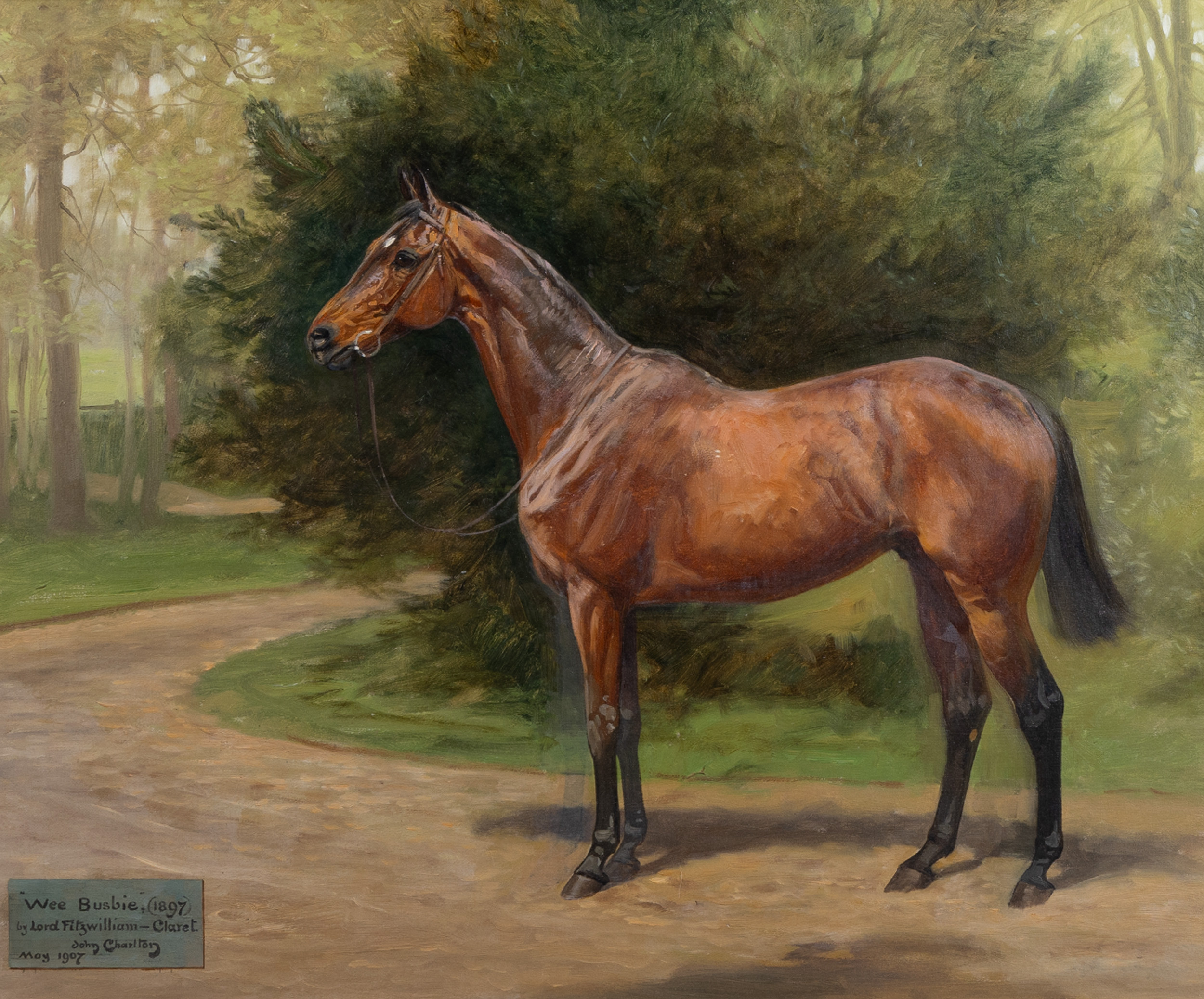
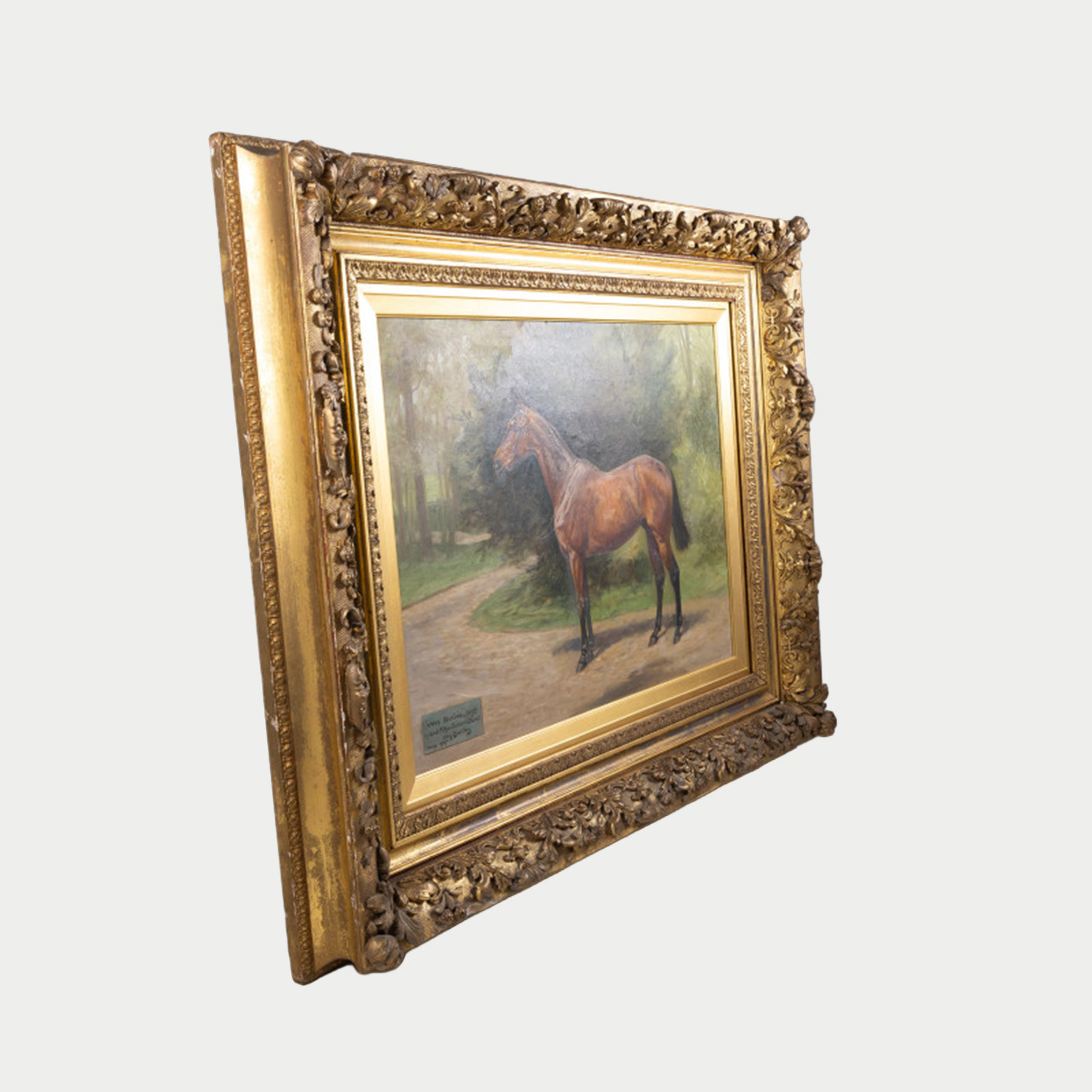
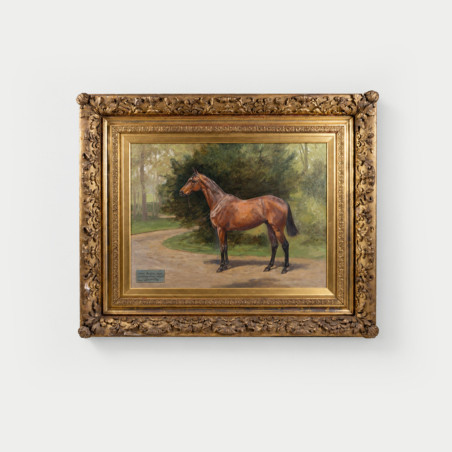
An exceptional Edwardian equestrian portrait by the celebrated British sporting and military artist John Charlton (1849–1917), depicting the bay racehorse Wee Busbie, foaled in 1897. Painted in May 1907, this substantial oil on canvas is a fine example of traditional British sporting art from the early 20th century.
Each piece is expertly vetted and accompanied by a Certificate of Authenticity.
John Charlton (1849–1917) – Wee Busbie (1897) – 1907 British Equestrian Oil Painting
An exceptional Edwardian equestrian portrait by the celebrated British sporting and military artist John Charlton (1849–1917), depicting the bay racehorse Wee Busbie, foaled in 1897. Painted in May 1907, this substantial oil on canvas is a fine example of traditional British sporting art from the early 20th century.
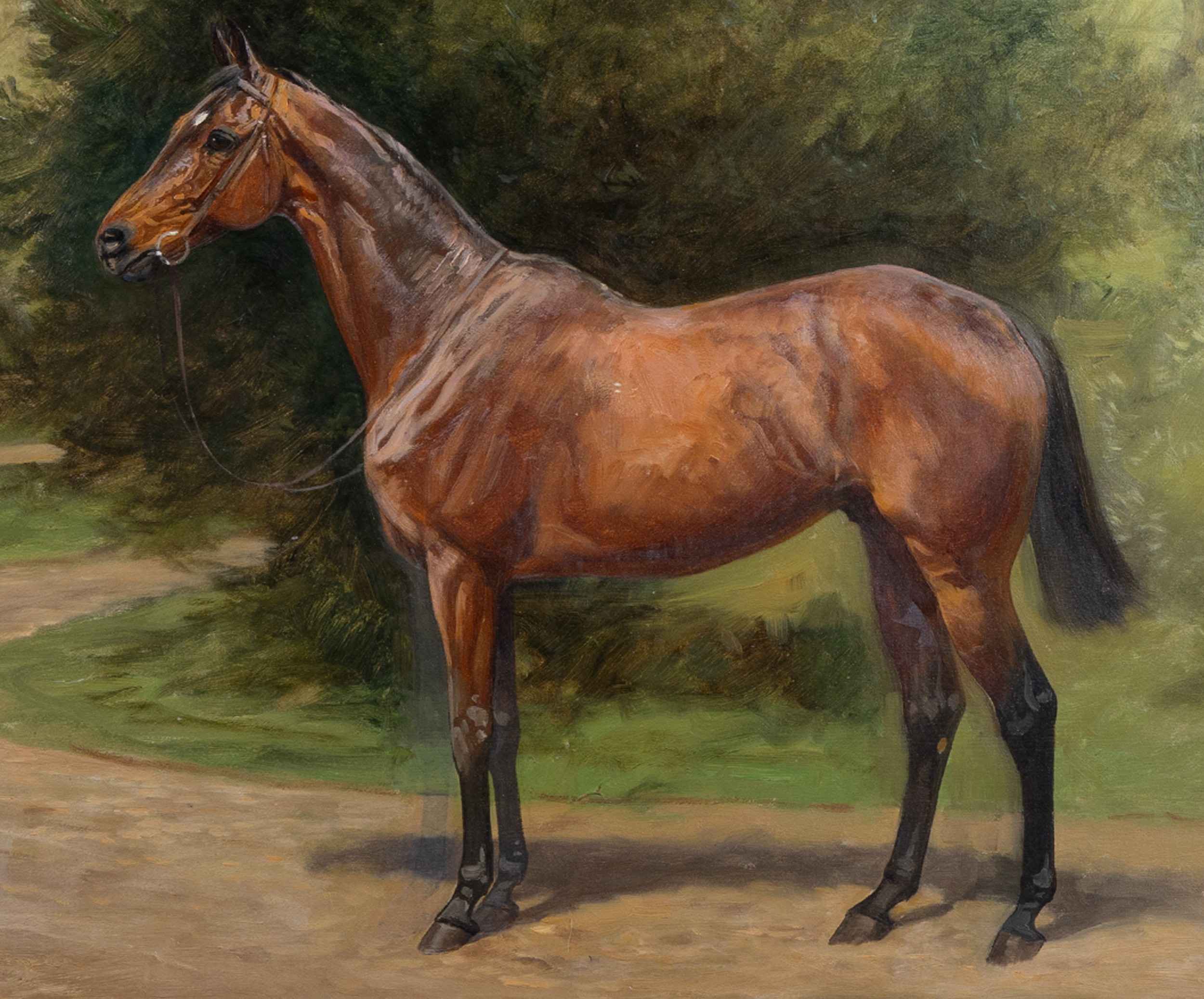
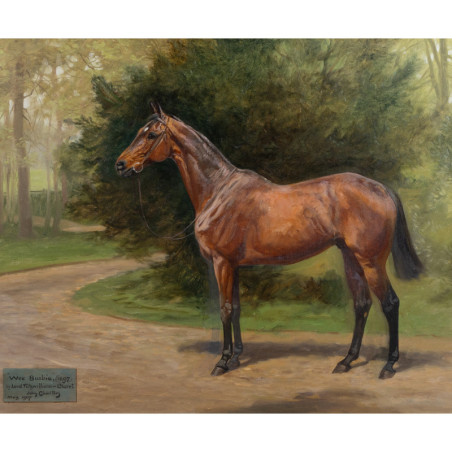
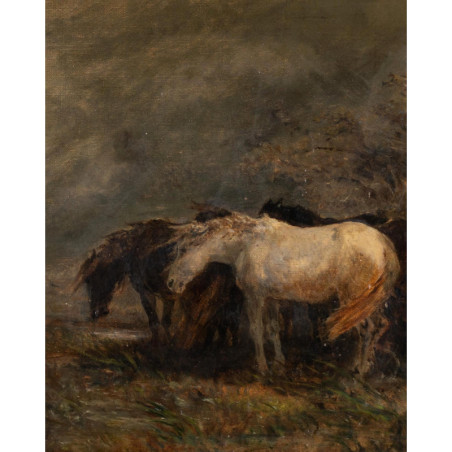
The horse is portrayed in a classic profile stance against a richly atmospheric woodland background. Charlton's accomplished handling of equine anatomy is evident in the carefully observed proportions, beautifully rendered bay coat, and alert expression of the animal. The warm tones of the horse contrast with the soft greens and browns of the surrounding landscape, creating a particularly harmonious composition.
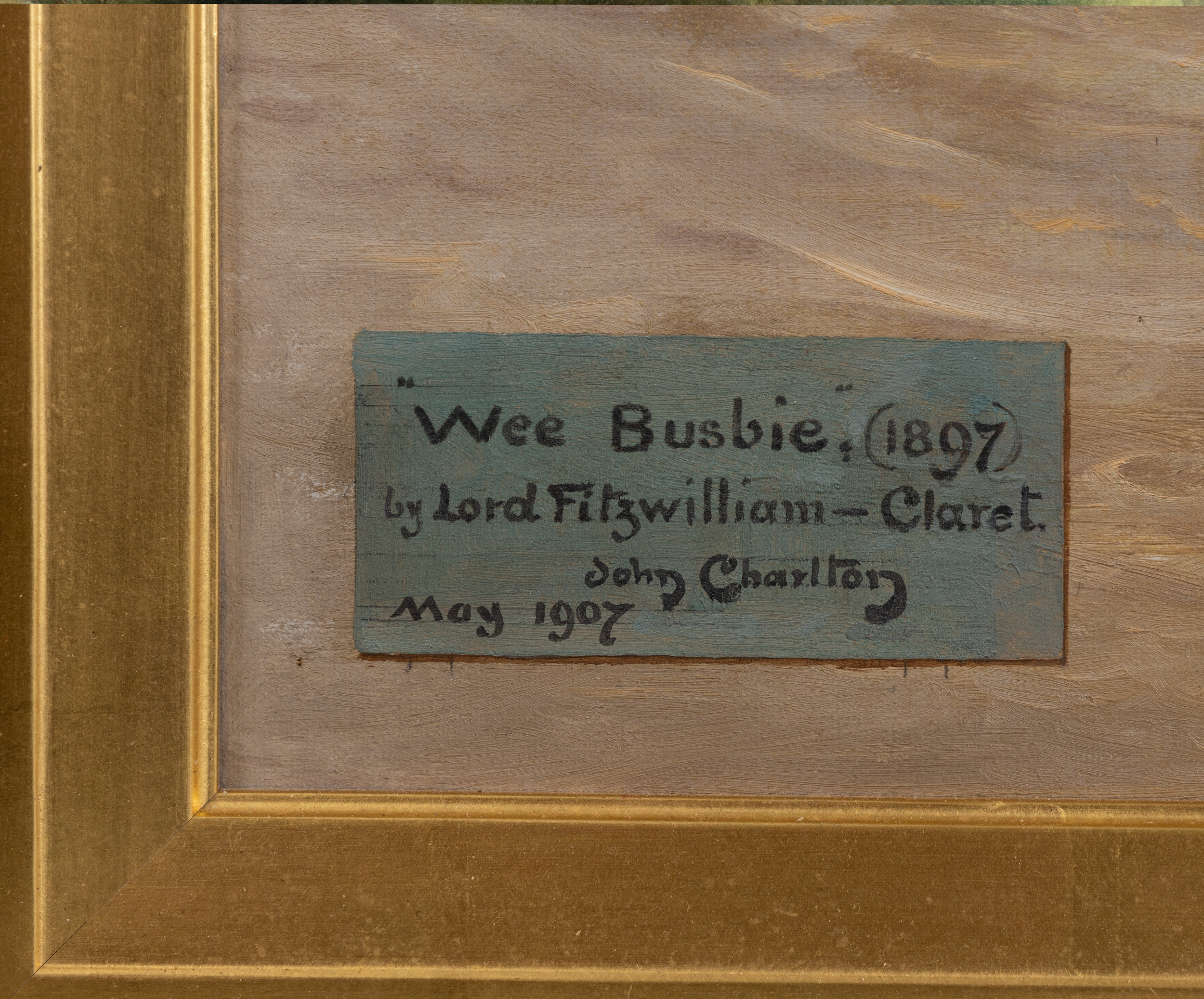
The painting bears a painted inscription at the lower left identifying the horse as Wee Busbie, together with details of its breeding, recorded as by Lord Fitzwilliam out of Claret. This inscription adds historical interest to the work and provides a connection to the traditions of British Thoroughbred breeding and racing.
Charlton's confident brushwork and sensitive observation capture both the physical strength and individual character of the horse, reflecting the longstanding tradition of British equestrian portraiture.
Details
Artist: John Charlton (1849–1917), British School
Title: Wee Busbie (1897)
Date: May 1907
Period: Edwardian, early 20th century
Medium: Oil on canvas
Subject: Portrait of the bay racehorse Wee Busbie
Inscription: Painted identification and breeding details at lower left
Overall framed dimensions: 90 × 75 cm
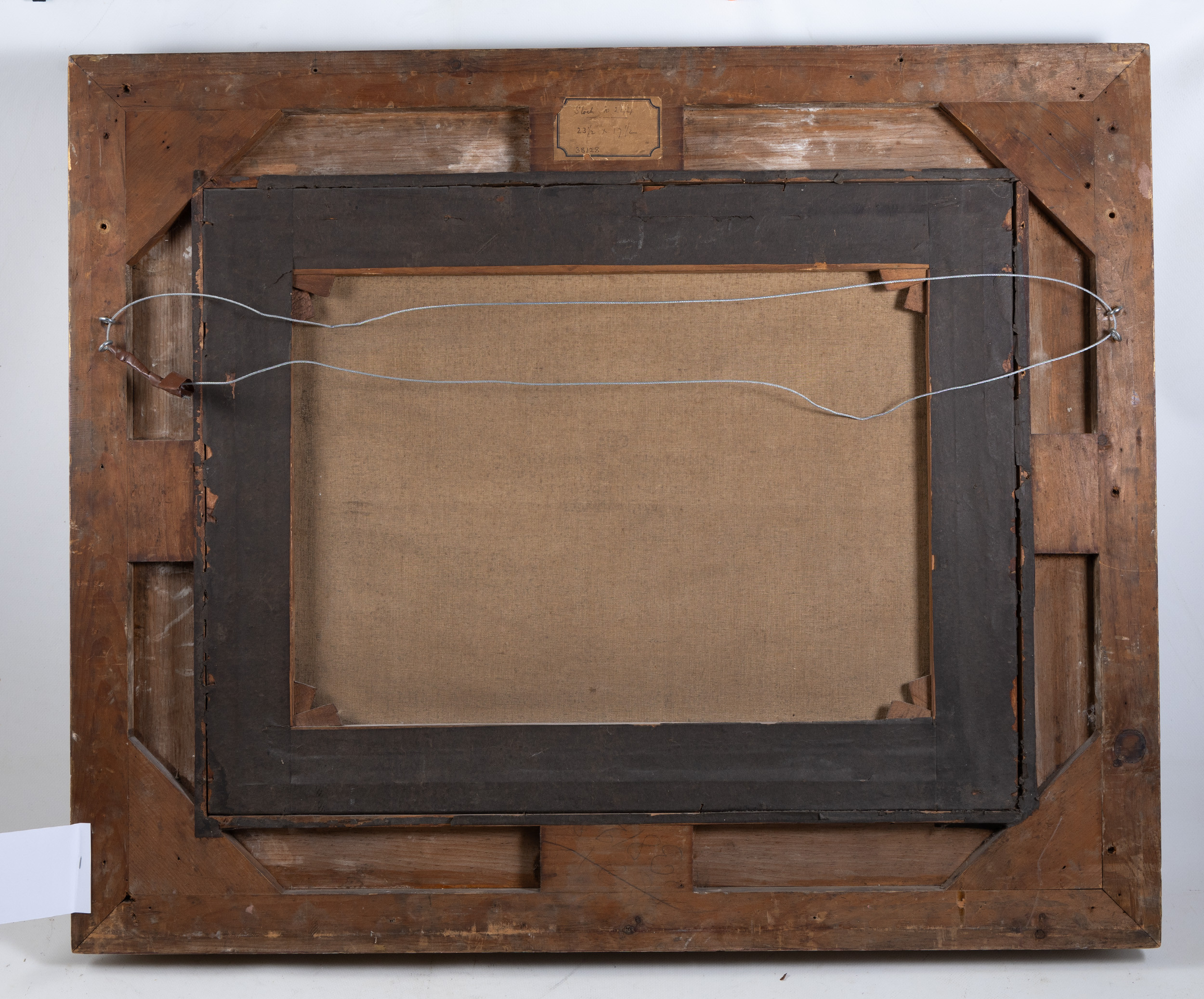
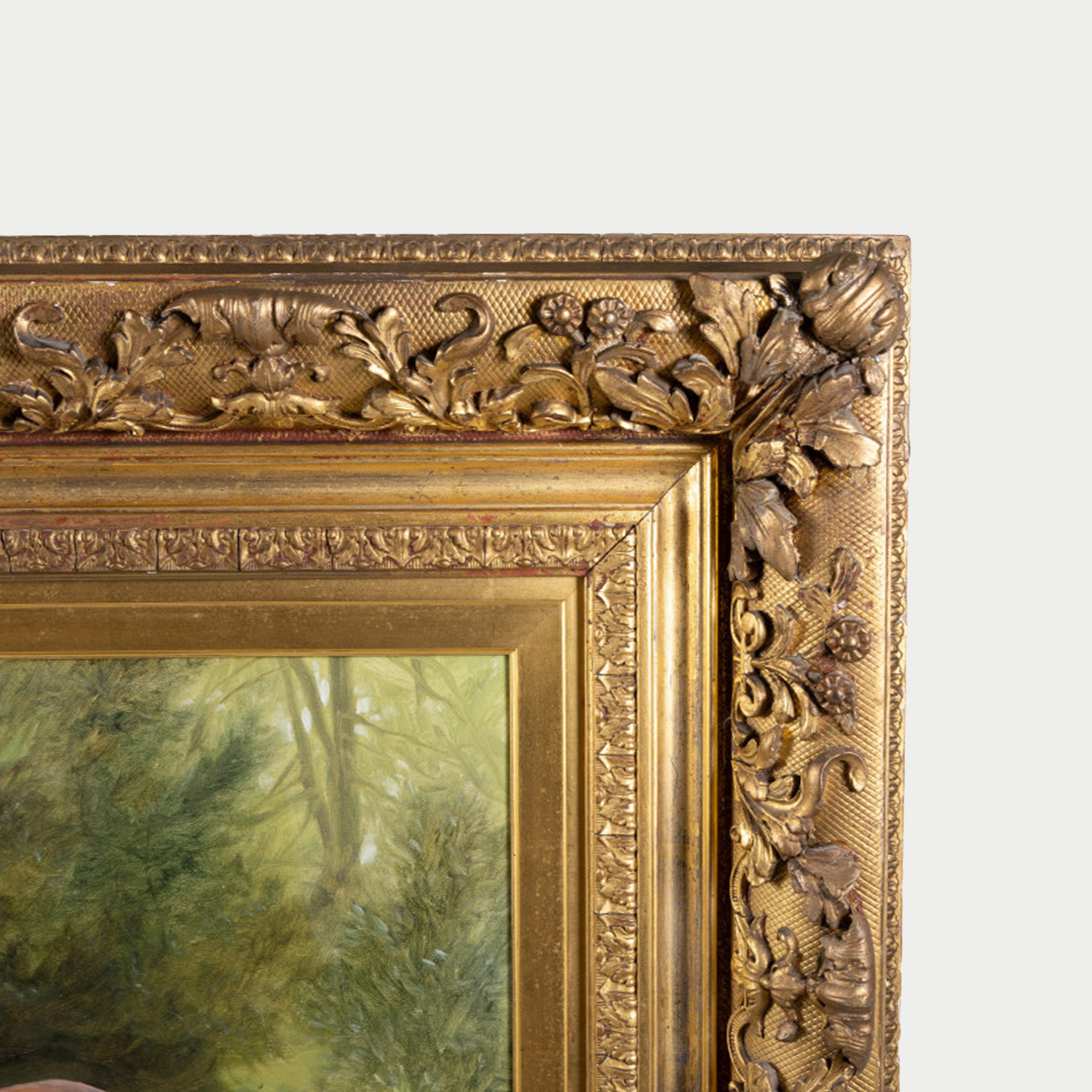
Frame: Substantial ornate gilt wood gallery frame, richly decorated with scrolling acanthus leaves and floral motifs
Type: Original Edwardian oil painting by a listed artist, not a print or reproduction
Condition
The painting is in excellent antique condition and presents beautifully. It is housed in its substantial gilt wood frame, which retains its attractive decorative detail and period character. The painted inscription identifying the horse and recording its breeding remains an interesting original feature of the composition.
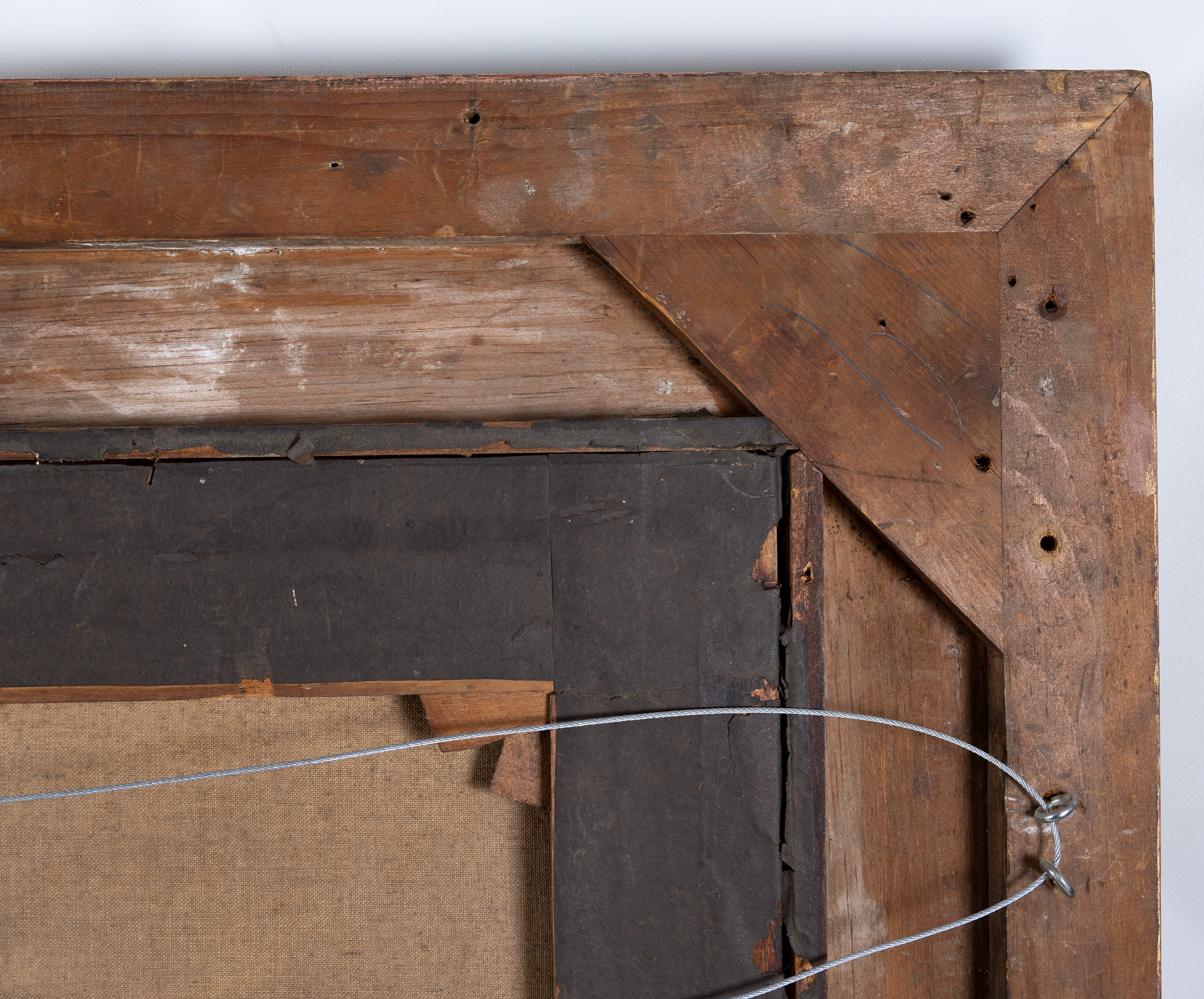
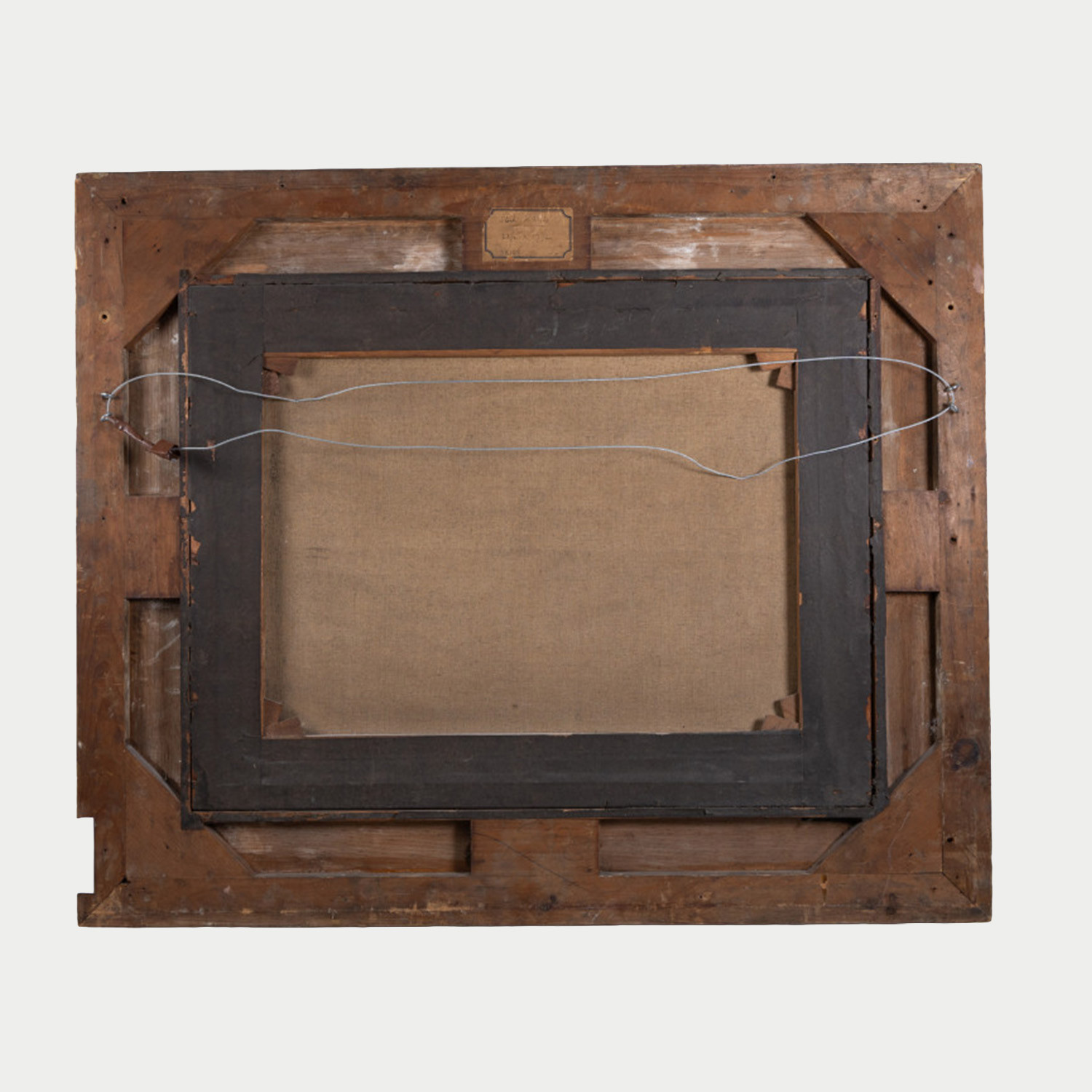
Please examine the photographs carefully for the condition and details of both the painting and frame, including the painted inscription, as they form part of the description.
About the Artist
John Charlton (1849–1917) was a distinguished British painter and illustrator, particularly celebrated for his military subjects, sporting scenes, and portraits of horses.
A regular exhibitor at the Royal Academy, Charlton was associated with several leading artistic societies, including the Royal Society of British Artists (R.B.A.), the Royal Institute of Painters in Water Colours (R.I.), and the Royal Institute of Oil Painters (R.O.I.).
His ability to depict horses with accuracy and vitality brought him considerable recognition. He also worked as an illustrator for The Graphic, where his dramatic representations of military engagements and horses in motion reached a wide audience.
Among his notable works are British Artillery Entering the Enemy's Lines at Tel-el-Kebir (1883), After the Charge: 17th Lancers, Ulundi (1888), and Balaclava: The Charge of the Light Brigade (1905).
Charlton also received royal patronage, including a commission associated with Queen Victoria's Diamond Jubilee celebrations in 1897. Examples of his work are represented in public collections, including the Laing Art Gallery in Newcastle and the National Army Museum in London.
Worldwide Atelier TransitSeamless, fully insured delivery from France directly to your door.
Transit Time
FedEx International Express (3–5 Business Days to the US)
Dispatched from our studio within 2 business days. Includes real-time door-to-door tracking and required signature confirmation upon arrival.
US Customs & Tariffs
Duty-Free Clearance (HTSUS Chapter 97)
Original fine art and qualifying antiques over 100 years old enter the United States duty-free. All official customs declarations and documentation are prepared in-house for seamless border clearance.
Transit Coverage
Full Transit Insurance
Every parcel is completely insured against loss or damage throughout its entire journey, from our atelier directly into your hands.
Atelier Packaging
Bespoke Multi-Layer Protection
Each work is hand-packed using archival materials, reinforced edge guards, and rigid double-wall boxing built specifically for international air transit.
Satisfaction
14-Day Return Window
Returns are accepted within 14 calendar days of delivery if a piece does not suit your space. Contact our atelier to initiate return details.